
You are told not to monetise your hobbies — but I’ve become a master of it.
By Rachel Weisz
I started my website The Pull about 8 months ago now. It was a place where I could explore my interest in fashion and culture while also having an excuse to work on my writing. Trying to become a fashion writer has been an isolating and slightly torturous process. For an industry so wide, the gates are tall and only a certain few get entry. It’s also been a struggle to maintain, as this is not my full-time job and my actual work has caused me such severe insomnia (I haven’t slept in two months — but that seems like a story for another day). I track it down to not doing the thing that I truly want to do, which is to write.
But how did I even get to a point where I decided to write about fashion? That’s what this piece is going to help me find out. What I’ve learnt is that the journey to fashion is not linear, and I find my story quite unique. So if you’re here to read about it — thank you!
My love affair with fashion actually started with film. I loved old movies from the 50s and 60s — think Funny Face, All About Eve, Breakfast at Tiffany’s… I was fascinated by the glamour of old Hollywood, attributing a lot of its sophistication to the costumes.
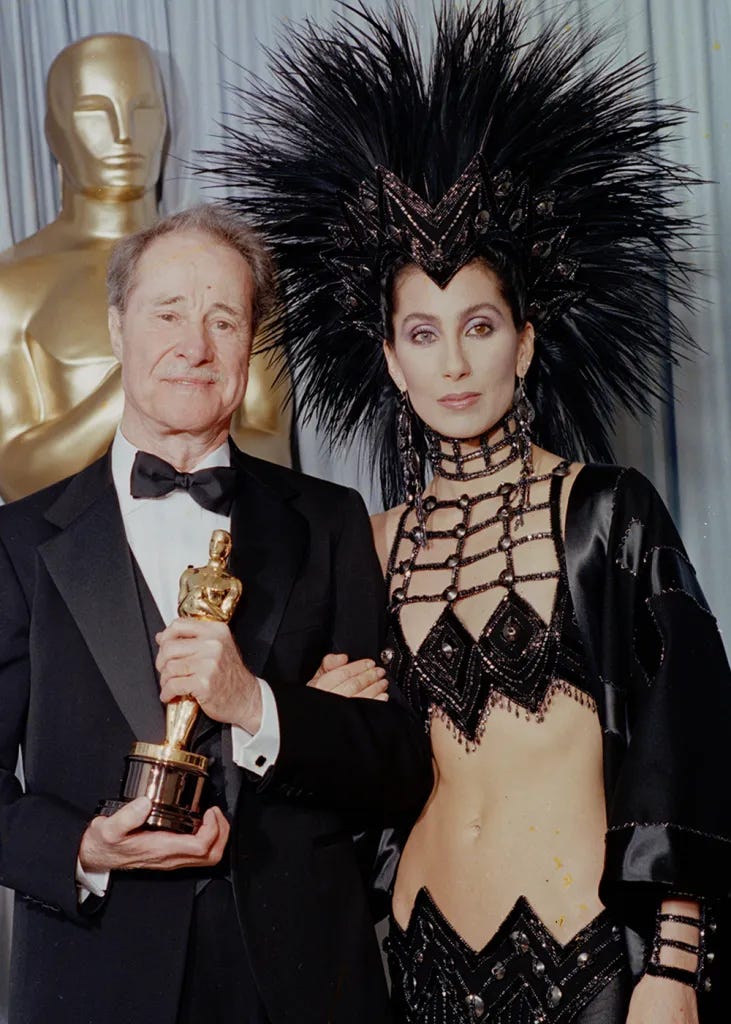
As someone who becomes very attached to their interests, I felt instantly pulled to deep dive into the world of costume design. Who was designing these pieces? What was the process back then? Why is costume design so crucial to the story? I quickly fell infatuated with costume designers from back in the day like Edith Head and Bob Mackie (a name attached to Cher, think THAT image of Cher at the Oscars in 1986, I’ll attach below). But my first crush on fashion truly began when I learnt about the ingenious collaboration between Hubert De Givenchy and Audrey Hepburn.
The synergy between Givenchy and Hepburn was magic. The two worked together for decades, creating moments like the little black dress in Breakfast at Tiffany’s, custom pieces for the film Sabrina, and even dressed Hepburn for award season (back then, costume designers often dressed the talent, as the concept of a celebrity stylist wasn’t really recognised until decades later — another deep dive I got really into). Below is Audrey Hepburn in a Givenchy dress at the 26th annual Academy Awards in 1954, where she won the award for Best Actress for her role in Roman Holiday. Hepburn was his muse.
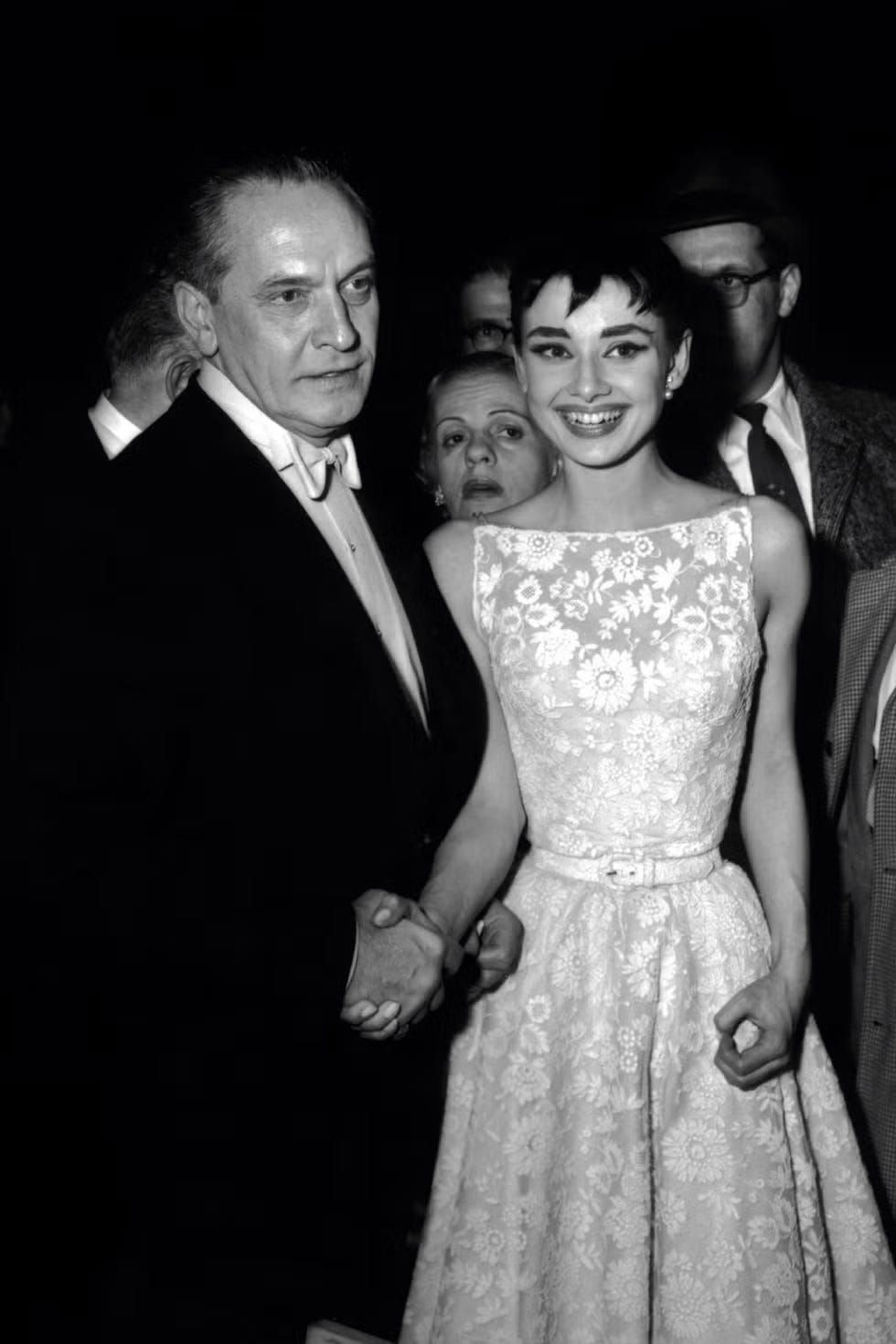
“Givenchy’s clothes are the only ones I feel myself in. He is more than a designer, he is a creator of personality” – Audrey Hepburn.
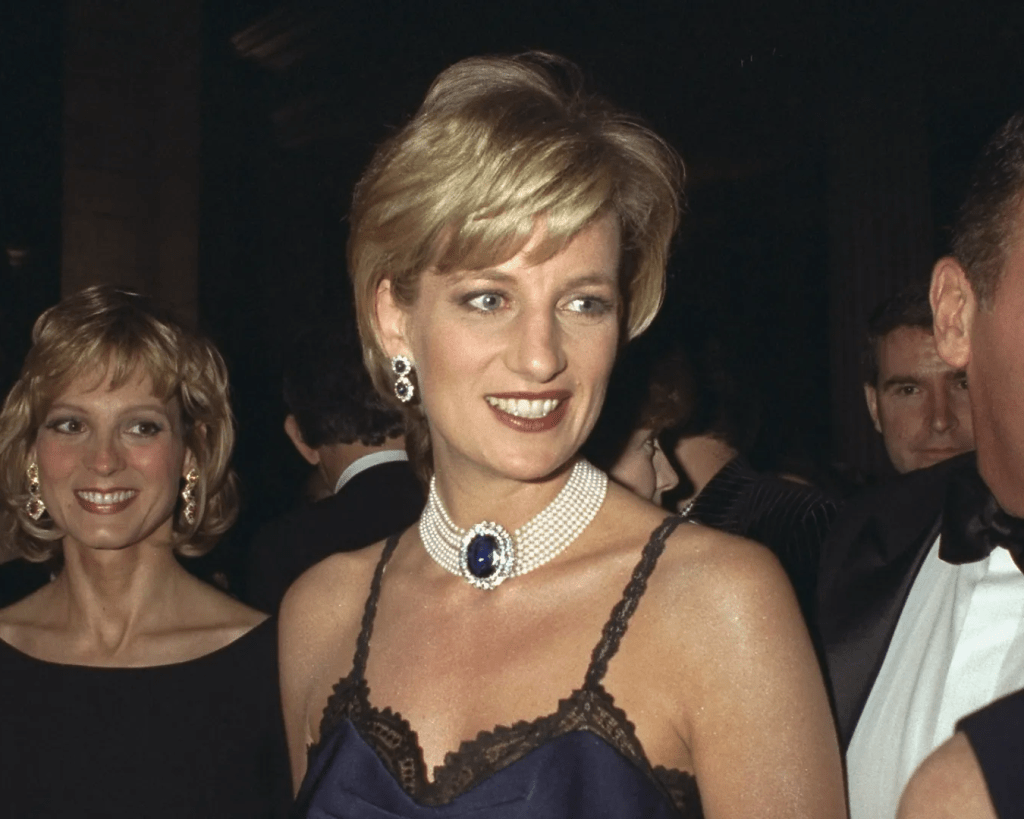
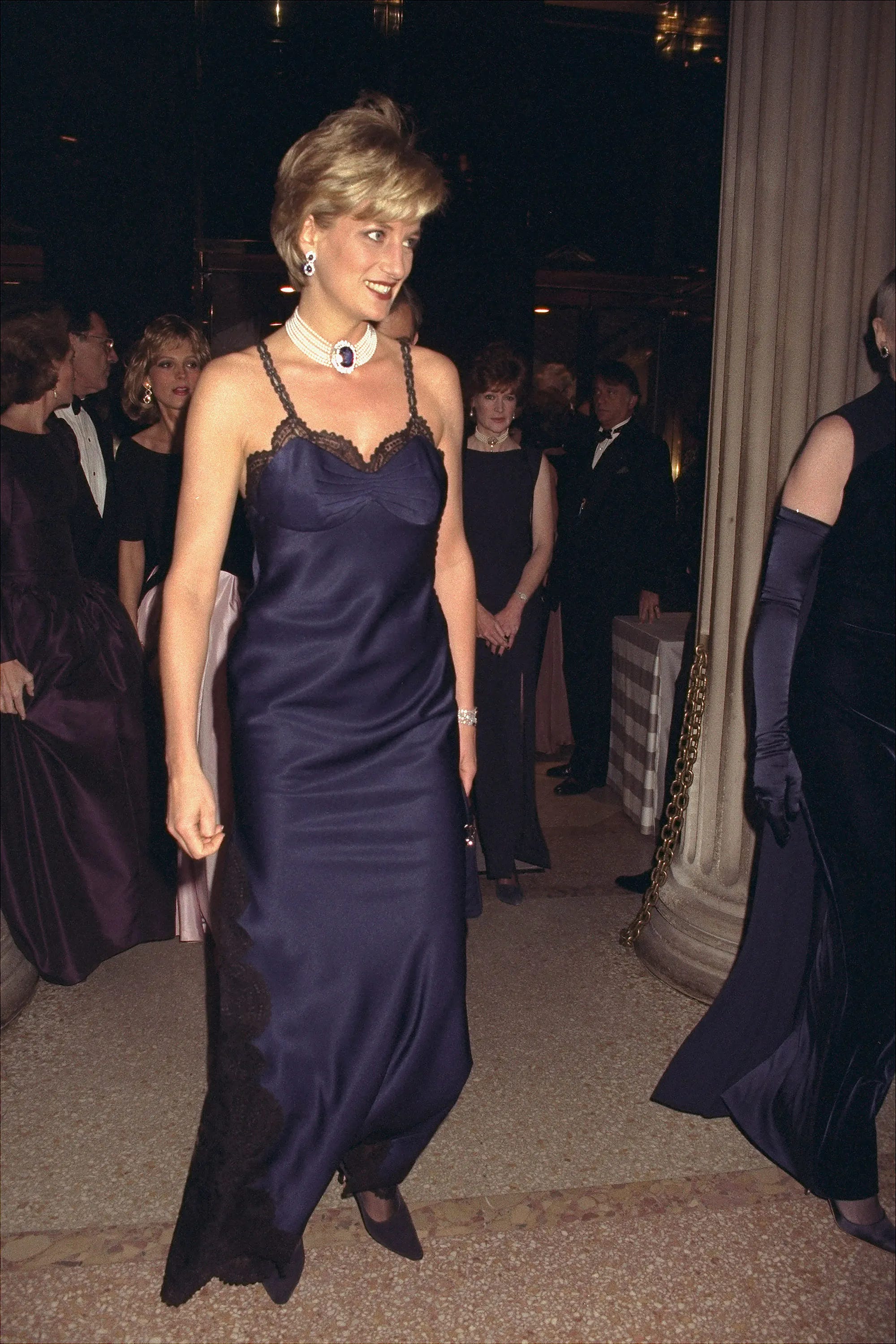
From there, I continued my immersive exploration of the world of fashion. It started with celebrity red carpets, where I would be in awe of the gowns. It would be incredible to see how clothing would create a certain aura around the wearer. It inspired creativity and confidence. And it was always a collaboration between two people, like a love story unfolding. I was inspired by how the dress was conceived, and who made it. I wanted to know what kind of relationship lay behind the dressmaker and his muse. I recently watched the new docuseries In Vogue: The 90s where John Galliano revealed what went into creating the late princess’s only Met Gala look from 1996 — a slinky navy slip dress with black lace detailing. While this docuseries barely scraped the surface of fashion in the 90s, I do recommend watching it if you haven’t seen it yet!
“I remember one day we all jumped into this old van, and we went to London, where we met Princess Diana. She’d been invited to the Met, and she would wear one of my dresses… Fast-forward to the event, and I just remember her getting out of the car … I couldn’t believe it. She’d ripped the corset out. She didn’t want to wear the corset!” – John Galliano
To some extent, it’s not that I was necessarily invested in the clothes themselves (this developed more when I studied fashion design), but rather in the designer behind the business and the brand. Polarising as she may be, my first infatuation with a designer was Coco Chanel. I loved her determination and rising success. From a little orphan girl to an accomplished businesswoman, Chanel was a pioneer. She created a wardrobe for women inspired by menswear and sportswear that was free of constraints, emancipating women from restrictive corsets and frills. I would watch French films about her life, and even (accidentally) stole her biography from my grandmother’s nursing home library (sorry Judith) to devour. I also loved reading about the strained relationship between Chanel and Elsa Schiaparelli (my favourite designer), who also rose to prominence during this time
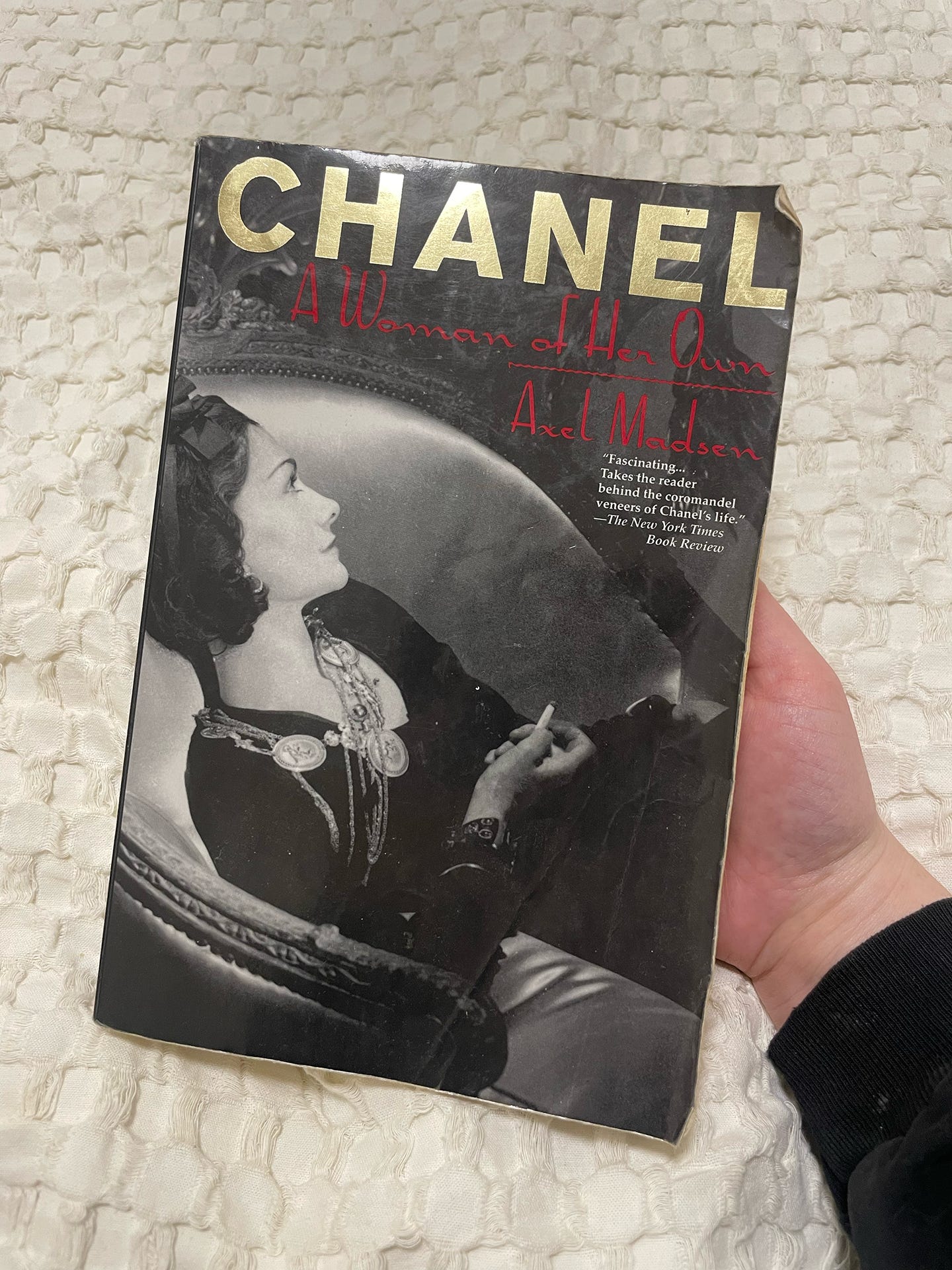
This infatuation did end though once the little Jewish girl (me) found out Chanel believed in the Nazi cause (so many films swept over this part). The part that made me lose all respect for her was when she unsuccessfully tried to use the Nazi’s Aryan laws preventing Jews from owning businesses to try to take control of her perfume company from her Jewish partners. The conversation of the art vs the artist is something I’d love to analyse, but that’s for another day.
I was in my mid-teens when I really gravitated to this world that seemed entirely different from my own. I had recently rehabilitated myself from the Tumblr era, where I fell vulnerable to thinspo and quotable shows like Skins and the rabbit hole of teenage emotions. Back then, this world of fashion felt like an escape from it all. It was glitzy and glamorous and with rose-tinted lenses on, it was everything I wanted in a life. It was like nothing I had seen before. This flip in interests shouldn’t be too much of a surprise. It’s a story as old as time. Think about when society entered the 70s with its sexual liberation and freedom from the conservative 60s, or the rise of celebrity and the glamour renaissance post-90s grunge. Or even the time you went from wanting thick bushy brows (2020) to none at all (2024)! This pendulum exists on all levels, in all forms. And once something feels oversaturated, we move on to the next. But thankfully, fashion has been a constant in my life ever since.
Looking deeper, I also appreciated (and still do) fashion as a form of art: an outlet for the emotional weight of life. Fashion will always be more than its surface appearance. My mind goes straight to Lee Alexander McQueen: a tortured artist who created beautifully crafted, avant-garde pieces with dark references reflective of his own demons. His show Voss from the Spring/Summer 2001 is what comes to mind. Taking place in a mirrored, padded room reminiscent of an asylum, the models walked hauntingly in the enclosed space wearing distressed fabrics, bandages and feathered details. It’s dark and haunting and it’s absolutely genius! The show encapsulated McQueen’s fascination with life, death, and the fragility of the human mind — it’s one to research and watch.
Fashion to me has always felt like a kind of escape. Whether it be the mode of expression by a tortured artist, a nostalgic exploration of culture and time, or a way to pursue confidence. Fashion to me is a destination, as it has always been something I’ve felt far removed from. I have no family backstory to show that my interest in fashion is hereditary. My grandmother was a dressmaker for a short period, but she actually hated the craft! Neither of my parents shared an interest in clothes, and I was only passed down hand-me-downs as a kid (not the cute kind). I also felt so far removed geographically by living in Australia. But I was wildly curious and independent and now feel like a seasoned traveller in this mysterious land of creativity.
And then I decided I wanted to make a career out of it. You are told not to monetise your hobbies — but I’ve become a master of it. From starting my own business embroidering t-shirts to crocheting bags and accessories — and now writing, my rebellious ego doesn’t want a bar of it. But I don’t want to live a life where you work 40 hours a week on something you’re not passionate about. Even if I tried to, I’d be bored or restless — perhaps with a sprinkle of insomnia (again, a story for another day). So if you are reading this to see if I make a fool out of myself, I probably will — but at least I’ll be doing something I love. And if not, I’ll be a killer at fashion trivia. So watch this space.
 The Pull