
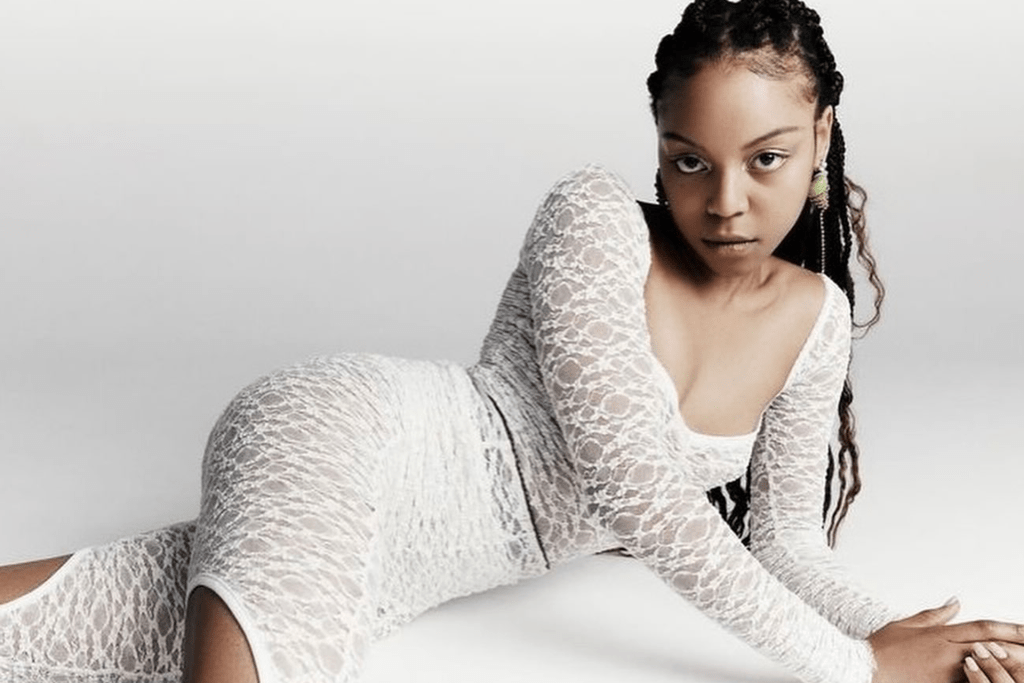
The concept of fashion and movement is incredibly interlinked, as if one cannot exist without the other.
By Rachel Weisz
Fashion is kind of like a dance. First, there is a concept; whether that be a theme, a muse or an experience. Next comes the choreography — or in fashion’s case — the piecing together of patterns that form the structure of the garment. And lastly; there is a meticulous practice of refinement and repetition until the final piece is ready to take centre stage.
What weaves these two artistic endeavours together is the appreciation for how the body moves and how this movement tells a story. Both dance and fashion grow on the basis of control and stability. Both can appear fragile, yet will fall to its feet if the construction is weak. Both practices need to create a sense of harmony and balance, as well as visual interest. It makes the concept of fashion and movement incredibly interlinked, as if one cannot exist without the other.
On the international stage, artist Iris van Herpen understands what it means to conceptualise fashion inspired by movement. “I wanted to become a dancer, and I think those years are still shaping my fascination for movement in my work today,” she says for the New York Times. Iris, who started her eponymous label in 2007, learned classical ballet as a child in the farming village of Wamel. “Dance inspired me to look at fashion from a transformable perspective — my design process is sort of translating a piece of dance, a three-dimensional choreography of micromovement, into a garment,” say the designer. Known for her haute couture craftmanship, van Herpen has a true affinity for creating an ethereal disposition while transforming the fixed human structure.

On our Australian shores, there is a similar taste for this artistic union. Homegrown fashion heroine Caroline Reznik takes this concept of movement and collaboration with the body through her avante-garde creations. Her background as a trained ballet dancer combined with her fashion education at Sydney’s University of Technology influence her creative processes, and it is these diverse set of tools that allow her to craft her technical sartorial language. She explores the foundations of construction through the language of dance, even employing the Benesh Movement Notation to visually note down her creative ideas, she tells Vogue.
Caroline has an ethereal nature to her work, blending surrealism with meticulous craftsmanship. What is most striking about Reznik’s work is her undeniable understanding of movement, exercising her artisanal capabilities to demonstrate form and function. Not only does she reference dance in her creative ideation, but also utilises these motifs in her subjective concepts. Her designs almost feel rebellious towards traditional dance attire, whether that be through choice of dark, grotesque tones, or her visceral application of leather and metal which manifested during her Afterpay Australian Fashion Week debut in 2023. This collection explored “the macabre and primal components of the human psyche,” and referenced “a coherent fascination with subtle hedonism, exotic animalia and dark romantic sensibilities,” according to the designer’s statement. For this collection, Reznik notes; “The synergy between the brand’s DNA and storytelling unites a dance between upholding the main characters, explored through emotive power and human instinct.”
“My work is about translating a theoretical understanding of movement into new methodologies through the use of cloth on the body,” says Caroline for UTS.
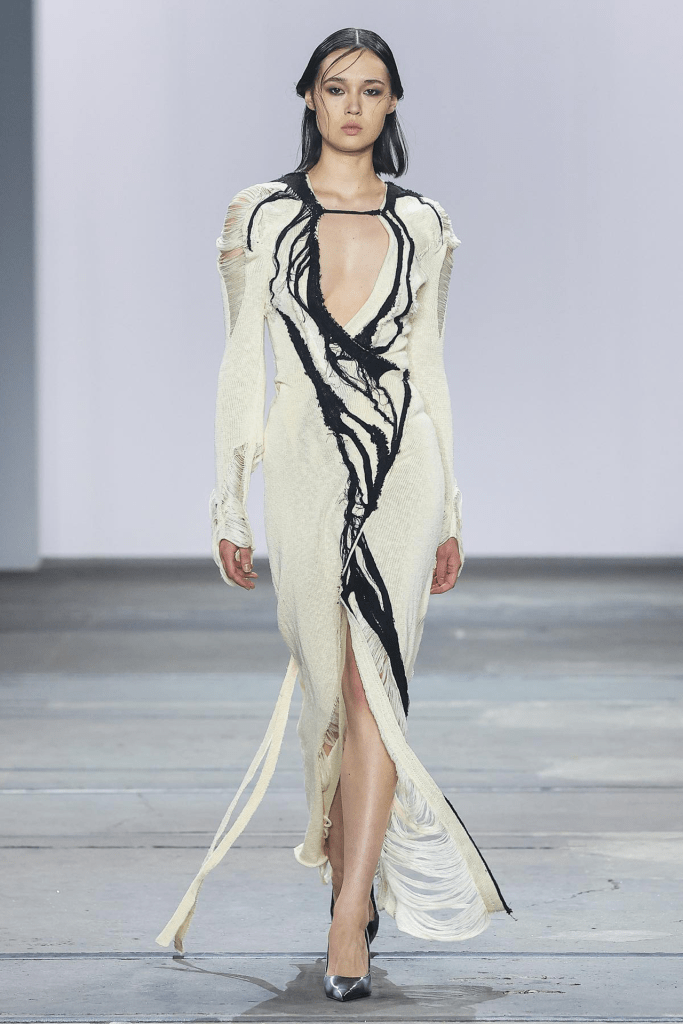
In another endeavour channelling a sartorial waltz is Maroske Peech, whose dance backgrounds hold a similar influence to their design concepts. Elisa Keeler and Jordan Conder are the Melbourne-based duo that make up the brand. What started as an experimental design project during and after their tenure at RMIT became a social media success story, instantly paving a lacey, leotard-shaped stamp into the hearts of many.
The duo’s young reflections of childhood dance lessons and dreams of the stage are prominent motifs throughout their work. It also inspires the way they construct garments — from exaggerated high-cut leotards and lace stockings spiralling around the body to theatrical cape collars, bubble skirts and pleating reminiscent of costume designs for the stage — or as if Bella Baxter travelled to Melbourne. Each piece could easily be misplaced in a dancer’s studio and no one would blink twice. While their aesthetics are still within experimentations that ebb and flow, the brand always seems to have an affinity for the feminine spaces that made up our childhoods, such as the dance studio.
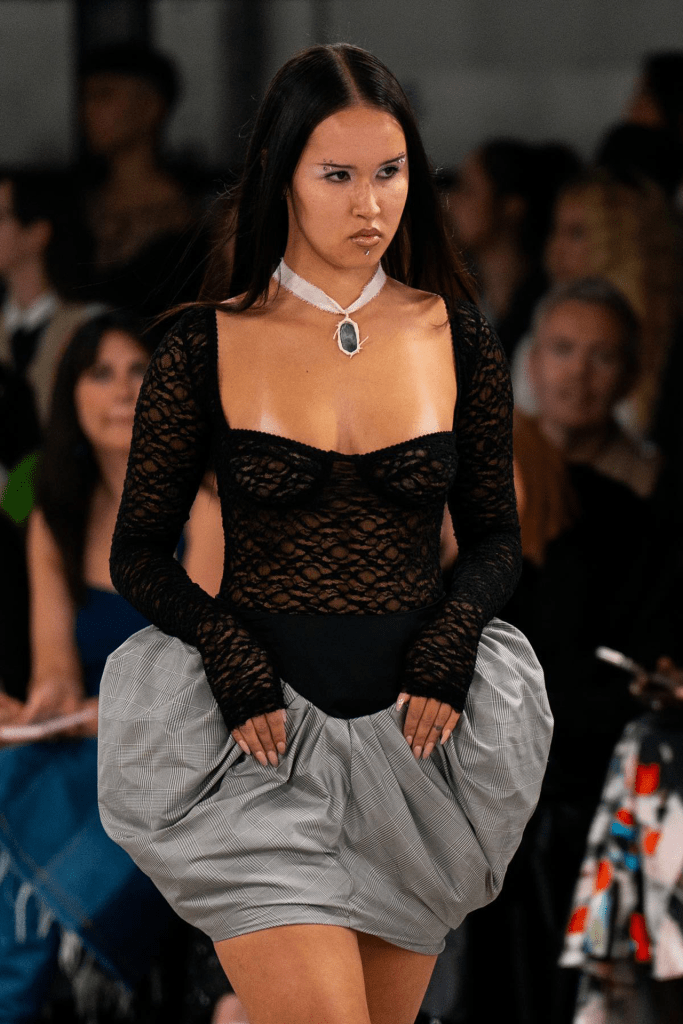
On telling their dream collaborations to Fashion Journal, the duo noted; “The Australian Ballet, Bloch or Energetics would be a really amazing experience… we can already imagine all the fashion dancewear pieces would be so fab and versatile.”
Combining a passion for sartorial experimentation with the art of movement produces work that honours the body, transcending fashion from not only a practical necessity but a work of art that should be studied. Australian designers such as Caroline Reznik and Maroske Peech set a high expectation for new artists who value structural integrity, art and passion. Dance and fashion is a duet destined for centre stage.
 The Pull